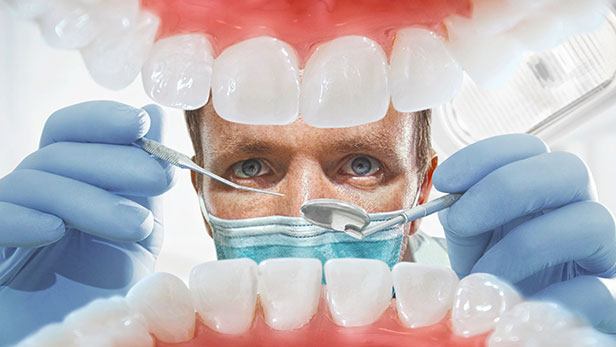

How Private Dentists Manipulate Light Reflection Properties to Engineer Restorations That Mimic the Translucency of Youthful Enamel

The Science Behind Natural-Looking Dental Restorations
The art of creating dental restorations that seamlessly blend with natural teeth represents one of the most sophisticated challenges in modern dentistry. Natural tooth enamel possesses unique optical properties that allow light to penetrate and reflect in specific ways, creating the characteristic appearance of healthy, youthful teeth. When a private dentist in Manchester crafts a crown, veneer, or composite filling, they must consider not merely the colour of the restoration, but how light interacts with the material at multiple levels.
Natural enamel exhibits a phenomenon known as translucency, which differs fundamentally from simple transparency or opacity. This quality allows some light to pass through the tooth structure whilst scattering other wavelengths, creating depth and vitality. The outermost layer of enamel is highly mineralised and relatively translucent, whilst the underlying dentine provides warmth and body to the overall appearance. This layered structure creates the subtle gradations that make natural teeth appear three-dimensional and lifelike.
Understanding Light Behaviour in Dental Materials
Light interacts with dental materials through several distinct mechanisms: reflection, refraction, absorption, and scattering. When light strikes the surface of a tooth or restoration, some photons bounce back immediately, creating surface lustre. Others penetrate deeper into the material, where they may be absorbed by chromophores, scattered by structural irregularities, or transmitted through to underlying layers. The precise balance of these interactions determines whether a restoration appears natural or artificial.
Modern dental ceramics have been engineered to replicate these complex optical behaviours. Manufacturers incorporate various crystalline structures and glass matrices that manipulate light in ways similar to natural enamel. The refractive index of these materials—a measure of how much light bends when entering the substance—must closely match that of natural tooth structure. When this matching is successful, the boundary between restoration and tooth becomes virtually invisible to the human eye.
The Role of Opalescence and Fluorescence
Beyond basic translucency, natural teeth exhibit two additional optical phenomena that sophisticated restorations must replicate: opalescence and fluorescence. Opalescence refers to the bluish hue visible at the incisal edges of teeth when viewed in certain lighting conditions, whilst a warmer tone appears in transmitted light. This effect results from differential scattering of light wavelengths within the enamel structure.
Fluorescence represents another critical component of natural tooth appearance. Under ultraviolet light, natural teeth emit a soft glow due to organic compounds within the tooth structure. This property becomes particularly important in social settings with certain artificial lighting, where non-fluorescent restorations can appear flat and lifeless. Dental laboratories now incorporate fluorescent agents into ceramic materials to ensure restorations maintain their vitality across different lighting environments.
Layering Techniques and Material Selection
Skilled dental technicians employ sophisticated layering techniques to recreate the optical depth of natural teeth. Rather than using a single homogeneous material, they build restorations from multiple layers of varying translucency and colour saturation. The innermost layer typically mimics dentine, providing warmth and body, whilst successive layers of increasingly translucent material replicate enamel’s optical properties. This approach allows for subtle colour transitions and light interaction patterns that closely approximate natural tooth structure.
The selection of ceramic materials plays a fundamental role in achieving optimal light behaviour. Lithium disilicate and zirconia-based ceramics each possess distinct optical characteristics that suit different clinical situations. Lithium disilicate offers exceptional translucency, making it ideal for anterior restorations where aesthetics are paramount. Zirconia, whilst traditionally more opaque, has evolved through successive generations to incorporate improved translucency whilst maintaining superior strength for posterior applications.
Clinical Application and Colour Matching
The practical application of these optical principles requires considerable expertise and attention to detail. Dentists must assess teeth under multiple lighting conditions—natural daylight, incandescent, and fluorescent—to understand how restorations will appear in various environments. Understanding how ceramic materials interact with light enables more predictable aesthetic outcomes.
Digital shade-matching devices have enhanced the precision of colour selection, measuring not only hue but also translucency parameters and fluorescence levels. These instruments provide objective data that complements the clinician’s subjective assessment, ensuring restorations integrate seamlessly with surrounding dentition. Research into optical properties of dental materials continues to advance the field, offering new insights into material science and light behaviour.
Achieving Aesthetic Excellence Through Optical Mastery
The manipulation of light reflection properties represents a convergence of art and science in contemporary dental practice. By understanding and replicating the complex optical behaviours of natural enamel, dental professionals create restorations that not only restore function but also preserve the aesthetic vitality associated with youthful, healthy teeth. This attention to optical detail ensures that patients receive results that appear natural across all lighting conditions and viewing angles, maintaining confidence in their smile for years to come.